
Prepare Stucco for Painting in Colorado Springs and Castle Rock
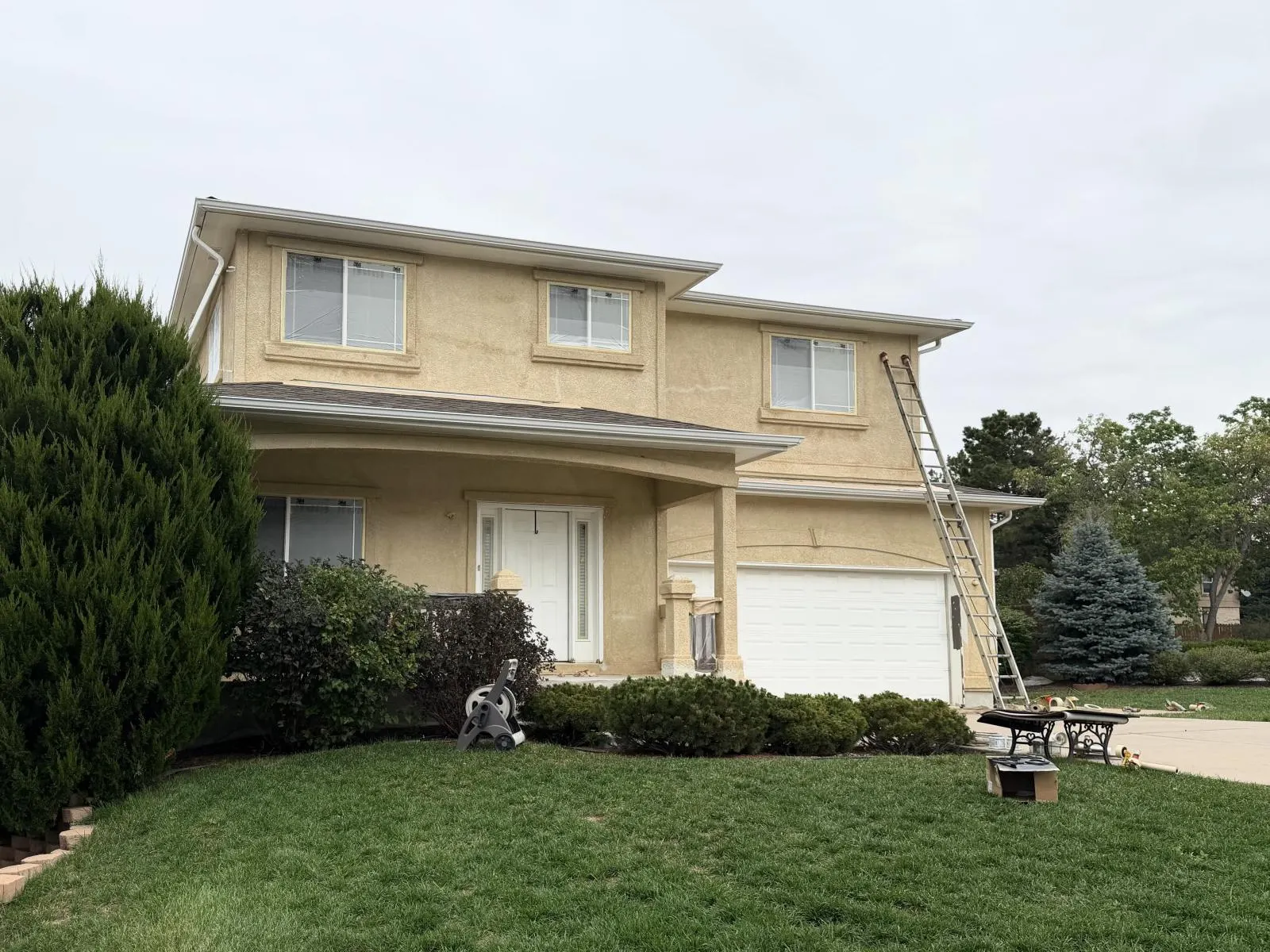
Stucco needs repair before painting when you see open cracks, coating that lifts or flakes off, or spots that feel soft or damp. Dirt and chalky residue may need cleaning, but underlying damage may also need repair. If you are planning stucco painting in Colorado Springs or Castle Rock, a walk around the house with a notepad can help you identify visible concerns to discuss before an estimate.
Signs stucco needs repair before painting
Start with the cracks. Hairline cracks that look like a thin pencil line are common in stucco and are often handled with the coating or a flexible filler. Cracks you can slide a fingernail into, cracks that run wider at one end, or cracks that sit at the corners of windows and doors may point to movement or moisture and should be looked at before any paint goes on.
Next, look at the coating itself. Peeling, blistering or flaking paint means the bond has failed, and a new coat over it may also fail. Press gently on any bubbled area. If it feels soft, crumbly or hollow when you tap it, the stucco underneath may have come loose from the wall.
Then check for moisture. Dark patches, staining below windows, and spots that stay damp long after the rest of the wall has dried are all worth noting. Moisture retained in stucco can contribute to coating failure.
Dirt and chalking versus damage
Chalking is a powdery film that comes off on your hand when you rub the wall. It comes from aged paint breaking down at the surface. Dirt, dust and green or gray growth on shaded walls are usually surface issues that get cleaned off during prep, though a spot that stays dirty or damp can point to a moisture source worth checking.
| What you see | What it usually means | Typical next step |
|---|---|---|
| Powder on your hand | Chalking, aged coating | Wash and prep, then recoat |
| Hairline cracks | Often surface cracking | Fill or bridge with the coating system |
| Wide or growing cracks | Possible movement or water entry | Stucco repair before painting |
| Peeling or blistering paint | Failed bond, possible moisture | Remove loose coating, find the cause |
| Soft, hollow or damp areas | Damaged or saturated stucco | Repair and let it dry fully |
Note when and where it happens
Write down where each problem sits and whether it changes after rain or snowmelt. A crack that darkens after a wet week may be taking on water. A patch under a downspout or roof edge often points to a drainage problem that should be fixed so the new coating does not suffer the same fate.
What a sound surface needs before a new coating
Preparation is an important part of a good coating job. The wall needs to be clean, solid and dry so the new finish has something to grip.
- Remove dirt, chalk and any loose or flaking coating.
- Cut out and patch damaged stucco through stucco repair, matching the texture where possible.
- Let the repairs dry and cure as the patch material directs before anything is applied over them.
- Prime or spot prime bare patches so they do not absorb the finish unevenly.
- Apply the finish coat in the weather range the product calls for.
Also check that the existing coating is sound and compatible with what is going over it. Some coatings are made to be flexible and breathable, and a poor match can trap moisture or peel. Ask whether the crew can identify the existing coating and explain why the planned finish suits it.
Skipping repair to save a step usually backfires. Paint can hide a crack for a while, but if the cause is movement or water, the crack will often reopen and the coating over it will split.
Stucco coating checks for Colorado weather
Colorado winters bring snow and freeze-thaw cycles. Water gets into small cracks, freezes, expands and widens the gap, then does it again the next time temperatures swing. That is why cracks and soft spots can be a concern going into winter.
October and November weather along the Front Range can shift fast. Warm afternoons are often followed by freezing nights, and early snow is possible. Coatings have minimum temperature and cure requirements printed on the label, and the surface needs to stay dry through the window the product specifies. Do not coat over a wet wall, and do not schedule work around temperatures outside the product guidance.
The same goes for repairs. Patch material needs time to dry before it is coated, and cold or damp days can stretch that out. If the forecast does not give a workable window, it is often better to make repairs, note the schedule and wait for conditions that suit the product.
Check your own property conditions
Homes in Colorado Springs, Castle Rock or Monument can sit in very different exposures. A north wall that stays shaded and wet can behave differently from a south wall in full sun. If snow lingers on your shaded stucco, note those areas for closer inspection. Look at which walls hold moisture longest, and flag them too.
What to check before scheduling stucco painting
- Make a note of cracks, peeling areas and any signs of moisture, and mark them with painter's tape if you like.
- Ask whether those spots need stucco repair before coating and how the surface will be prepared.
- Ask how the crew will deal with the cause if water is getting in, such as a gutter, flashing or grading issue.
- Confirm the expected weather window and the product's temperature and cure requirements before work begins.
Clear answers can help you assess whether the estimate accounts for the condition of your walls.
We offer a Free Estimate for stucco painting and stucco repair across the Colorado Springs area, and you can ask about areas that may need repair before coating.
Common questions
When should I repair stucco before painting?
Repair it first when cracks are wide or growing, when areas are soft, hollow or damp, or when paint is peeling in patches. Cosmetic issues like dirt and chalking may need cleaning, but check for underlying damage too.
Can I paint stucco in Colorado in October or November?
Sometimes, if the product label's temperature range is met and the wall is dry through the application and cure period. Early snow and cold nights can close that window, so confirm the forecast before work starts.
What is the difference between an exterior stucco coating and regular paint?
Some stucco coatings are made to flex over fine cracks and allow moisture vapor to pass through, but properties vary by product. Ask what is being used on your walls and why it fits.
Areas we serve
Our services
Have a question about your project? Call (719) 320-9830