
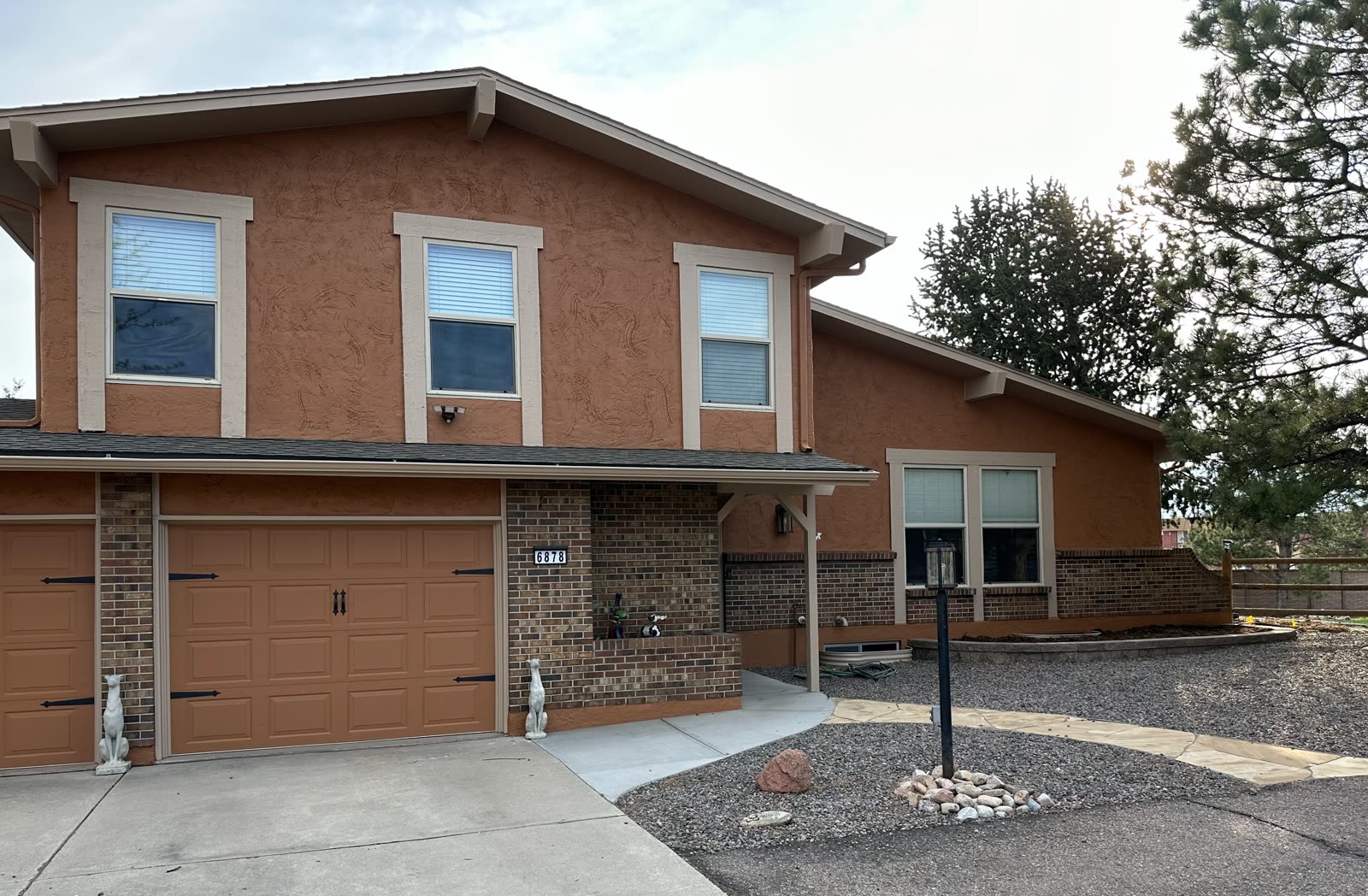
Stucco Painting Colorado Springs
Stucco is not siding, and it does not take paint like siding. It is alkaline, porous, and it moves. Colorado Springs sits above 6,000 feet, where UV is brutal and the freeze-thaw cycle runs most of the winter. Put the wrong product over a dirty or uncured wall and it peels in sheets.
Elastomeric or acrylic: the real difference
Both are water-based masonry coatings, but they do different jobs. A quality 100 percent acrylic masonry paint goes on around 3 to 4 dry mils over two coats. It breathes well and holds color. An elastomeric goes on far heavier, often 10 or more dry mils, and stays flexible enough to stretch across a hairline crack as the wall moves through the day.
Heavier is not automatically better. Elastomeric is the right call on a wall with a network of fine hairline cracks, because the film bridges them instead of just filling them once. It is the wrong call on a wall that is holding moisture, since a thick, low-perm film can trap that water behind the finish and push the coating off in blisters.
Cracks wider than a hairline are a repair, not a coating decision. An elastomeric will bridge a moving crack for a while and then split right back open along the same line. Anything structural, anything you can fit a fingernail into, and any spot that sounds hollow gets handled as stucco repair first, then painted.
Prep is where a stucco paint job is won or lost
Stucco is a sponge with texture. Dirt, chalk, mildew, and old failing paint all sit down in that texture where a roller cannot reach. We pressure wash the whole elevation, then scrape and wire brush anything that is chalking or lifting. If a wall chalks heavily under a dark rag, it gets a masonry conditioner or bonding primer before any finish coat.
The wall then has to dry. Stucco pulls water deep, and a saturated wall that looks dry on the surface can still be wet a quarter inch in. In Colorado Springs the low humidity helps, but a shaded north elevation in October is a different wall than a south face in July. We give it real drying time instead of chasing the calendar.
- Pressure wash every elevation, including soffit returns and the base of walls where splash-back collects.
- Scrape and brush all chalking, peeling, or blistered coating back to sound material.
- Caulk window and door perimeters, penetrations, and control joints with a flexible urethane or elastomeric sealant.
- Mask windows, roofing, decks, concrete, and landscaping before a single gallon is opened.
- Spot prime patches, raw stucco, and any bare or previously unpainted areas.
Alkalinity, efflorescence, and the cure window
Fresh stucco and fresh mortar are highly alkaline. Portland cement cures wet and stays chemically hot for weeks. Paint too early and the alkali attacks the binder in the film, a failure called saponification, which turns the paint soft, gummy, or streaky. New stucco generally needs about 28 days of cure before a standard coating, or an alkali-resistant masonry primer if it has to go sooner.
Efflorescence is the other tell. Those chalky white deposits are salts carried to the surface by water moving through the wall. Painting over them locks the problem in and the coating lets go later. Efflorescence has to be brushed off dry, treated, and the water source found, whether that is a failed sealant joint, a bad kick-out flashing, or sprinklers hitting the wall every morning.
Breathability matters because a stucco wall assembly is designed to dry outward. Coating perm ratings vary widely, and a heavy elastomeric build sits at the low end. On a wall with a known moisture path, a breathable acrylic masonry finish is usually the safer system even though it will not bridge cracks the way an elastomeric does.
High-altitude UV and how it eats your color
UV intensity climbs with elevation, and Colorado Springs sits above 6,000 feet. Woodland Park, Divide, and Monument are higher still. Thinner atmosphere means more ultraviolet hitting the wall, and ultraviolet is what breaks down the resin and pigment in a coating. South and west elevations take the worst of it, which is why they chalk and fade years before the north side does.
Pigment choice is not cosmetic here. Inorganic pigments, the iron oxides that produce earth tones, tans, and muted greys, hold their color far better under hard UV than the organic pigments used for bright reds, deep blues, and saturated yellows. Deep bases also carry more colorant and less titanium dioxide, which is part of why very dark stucco fades unevenly on a sun-baked wall.
Dark colors also run hot. A black or deep charcoal wall in full southern exposure can swing far above air temperature during the day and drop below freezing the same night, and that daily expansion cycle works cracks open. If you want a dark scheme, put it on trim, shutters, and the front door under house painting and keep the field color lighter.
How we run a stucco painting job
Every estimate starts on the wall, not over the phone. We check crack width and pattern, tap for hollow spots, look for chalking, check what the existing coating is, and look at where water is getting in. That walk decides whether the job is a breathable acrylic system or an elastomeric build, and it decides how much repair has to happen before anyone opens a bucket.
Application is spray and back-roll on almost every stucco wall. Spraying alone leaves the coating bridging the high points of the texture with thin spots down in the valleys. Back-rolling pushes it into the profile so the film is even. Two coats is the standard, and on an elastomeric that second coat is not optional, because the wet mil rate is what creates the crack-bridging film.
We work Colorado Springs, Monument, Castle Rock, Manitou Springs, Woodland Park, Fountain, Pueblo, Canon City, and the rest of the Front Range and Pikes Peak region. The full list is on the service areas page. Estimates are free, written, and itemized, so you can see the prep, the system, and the coat count before you decide. Get one scheduled.
Common questions
It depends on the wall. Elastomeric builds a thick, flexible film that bridges hairline cracks, so it suits a wall with widespread fine cracking. A quality breathable acrylic masonry coating is better when the wall needs to dry outward, since elastomeric has a low perm rating and can trap moisture. Cracks wider than a hairline should be repaired first either way.
New portland cement stucco is strongly alkaline while it cures, and that alkalinity can break down a paint film in a reaction called saponification. The general guideline is about 28 days of cure before applying a standard coating. If it has to be painted sooner, an alkali-resistant masonry primer or a coating rated for fresh masonry is required.
That is efflorescence, mineral salt carried to the surface by water moving through the wall and left behind when the water evaporates. It cannot be painted over. The deposits must be brushed off while dry and treated, and the water source has to be found and corrected. Common sources are failed sealant joints, flashing problems, grade issues, and sprinklers spraying the wall.
Late spring through early fall gives the most workable window. Most masonry coatings need surface and air temperatures above about 50 degrees Fahrenheit through application and the full cure, and overnight lows on the Front Range can drop sharply even in shoulder season. The wall also has to be dry, so a job is scheduled around rain and adequate drying time after pressure washing.
A recent stucco job, wall by wall.
Cracks patched, then the whole house recoated. Pick an elevation and drag the handle.
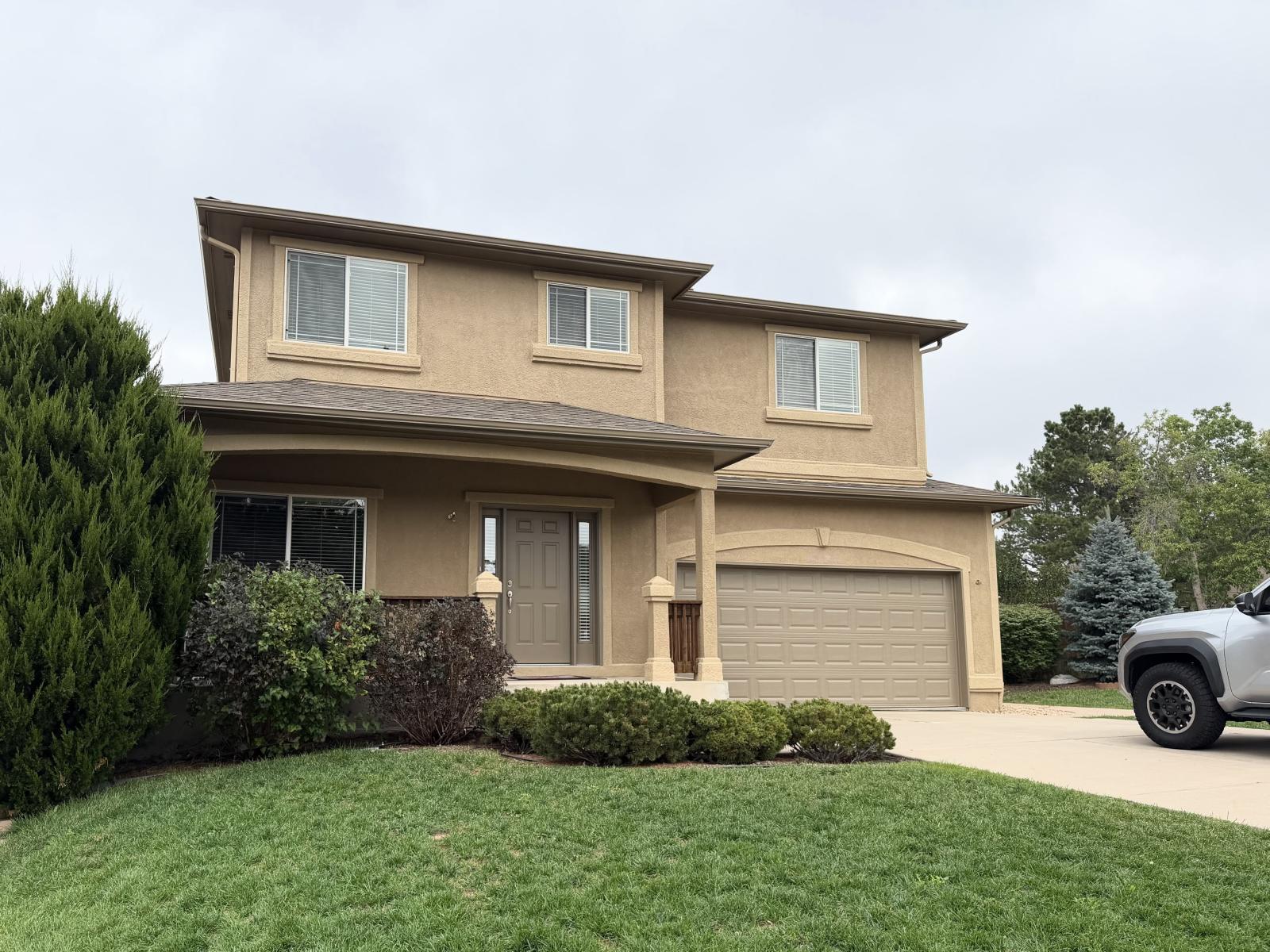
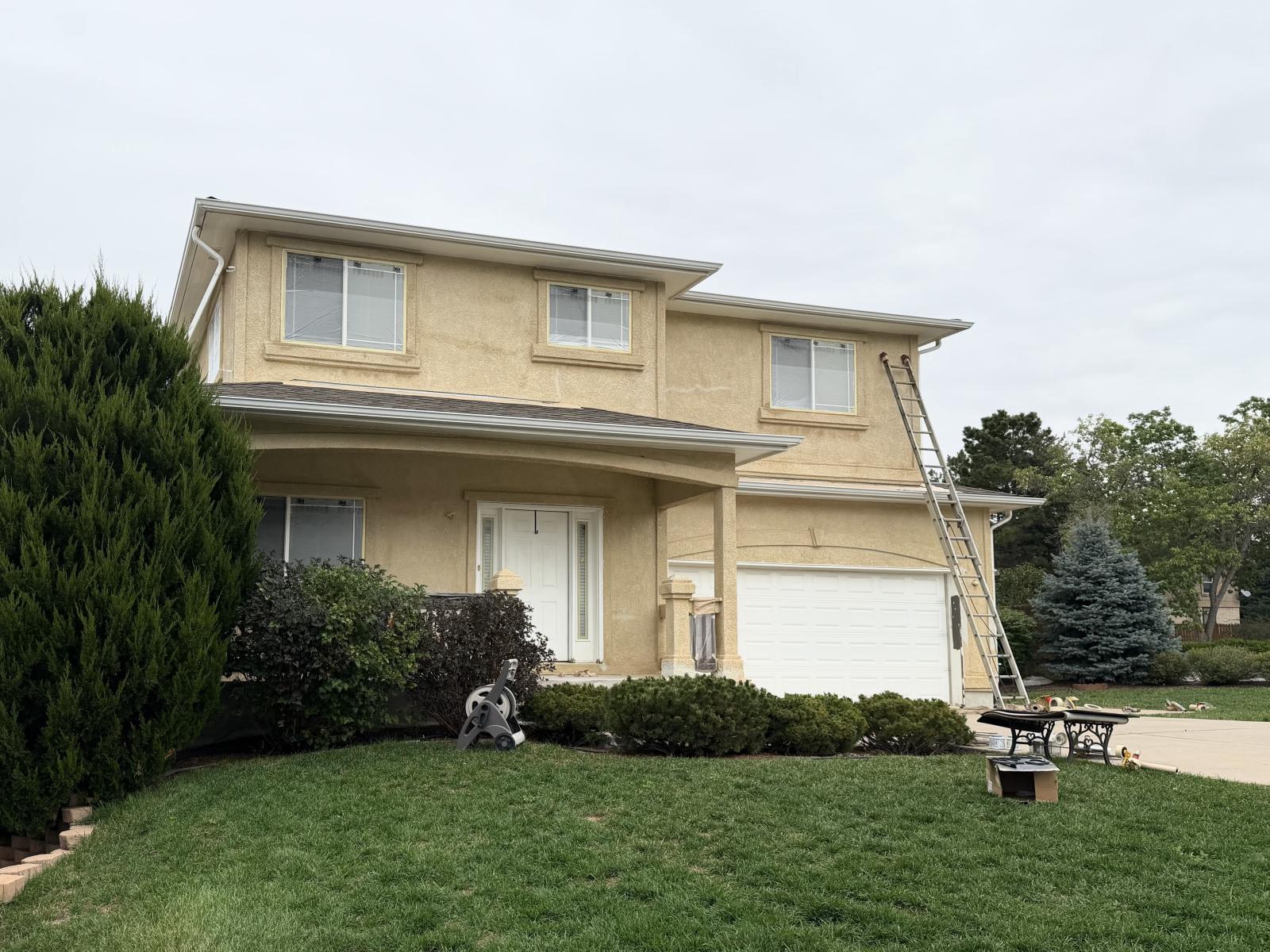
Stucco crack repair and a full repaint
- Scope
- Crack repair, full exterior repaint
- Surfaces
- Stucco body, trim bands, gutters, downspouts, doors
- Coverage
- All four elevations
- Finished
- September 2026
Pick an elevation
Get a quote
Free estimate, this week.
Tell us what you are looking at. We will come walk the property, find the cause, and leave you with a written, itemized number. No charge for the visit.
Colorado Springs, CO 80921